Introduction & Cultural Significance
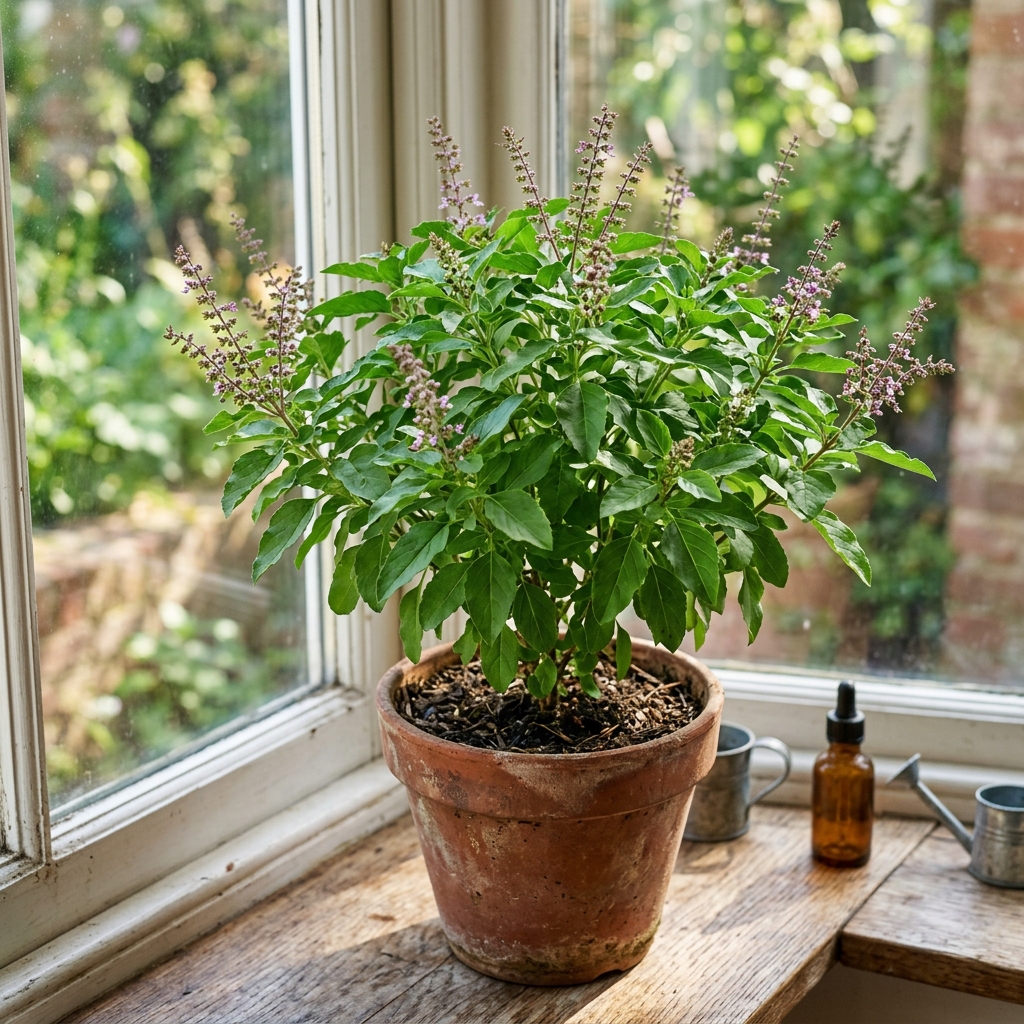
Tulsi (Holy Basil, Ocimum tenuiflorum or Ocimum sanctum) is revered across the Indian subcontinent as the "Queen of Herbs" and an auspicious botanical treasure in Ayurveda. Known for its distinct warm-clove, peppery aroma and potent adaptogenic properties, it is a daily staple for wellness teas and home gardens.
Like the curry leaf tree, Tulsi is native to tropical and subtropical climates. In cold northern climates (such as Ottawa and USDA Hardiness Zones 4–6), Tulsi cannot survive winter outdoors and must transition indoors before autumn temperatures begin to drop. With the right potting soil, sun exposure, and flower pinching routine, your Tulsi can thrive as a perennial houseplant for years.
Popular Tulsi Varieties
There are two primary cultivated types of Tulsi most popular for home gardeners, each with distinctive leaf colors, flavor profiles, and growth habits:
Bright Green Foliage & Mild Clove Scent
The most common household variety. Features bright green leaves, light purple blossoms, and a sweet, mellow clove-like flavor. Highly forgiving and easy to propagate indoors.
Deep Purple Leaves & Peppery Aroma
Prized for its dark purple leaves and stems, crisp peppery bite, and intense concentration of antioxidants and volatile oils. Requires slightly more sunlight to maintain its rich purple hue.
Sunlight & Warmth Requirements
Tulsi thrives on heat and abundant sunshine. To keep growth compact and aromatic:
- Sunlight: Provide at least 6 to 8 hours of direct sunlight daily in an unobstructed south- or west-facing window.
- Grow Light Supplement: In winter, when northern days are short (under 9 hours), use a full-spectrum LED grow light positioned 6–10 inches above the canopy for 12–14 hours daily.
- Cold Sensitivity: Never expose Tulsi to temperatures below 12 °C (54 °F). Frost will kill the plant within hours.
Aerated Soil Recipe & Pot Selection
Tulsi roots are delicate and highly prone to root rot if potted in heavy, moisture-retaining commercial soils. The ideal mix must be light, airy, and nutrient-rich.
Always choose unglazed terracotta or clay pots with a large drainage hole. Terracotta is porous, allowing oxygen to reach root zones from the sides while wicking away excess moisture, effectively preventing the fungal root issues that plague plastic containers.
Watering Protocols
Finding the balance between moisture and drainage is the secret to a long-lived Tulsi plant:
- The Top-Inch Rule: Water only when the top 1 inch (2.5 cm) of soil feels dry to the touch. Press your fingertip into the soil before reaching for the watering can.
- Morning Watering: Always water early in the morning at the base of the plant. Avoid wetting foliage in the evening, which invites fungal leaf spot and mildew.
- Empty Saucers: Never let the pot sit in standing drainage water in the saucer for more than 15 minutes after watering.
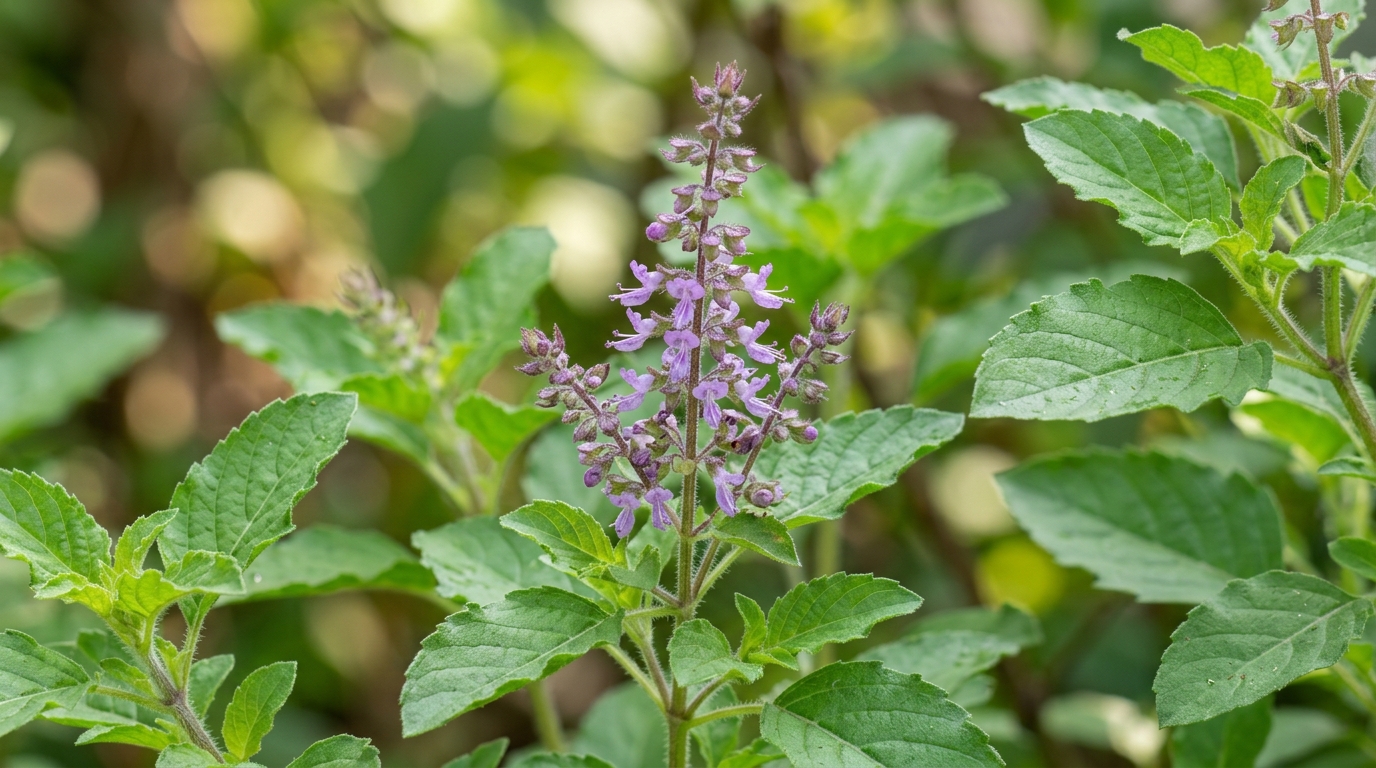
A purple Tulsi flower spike (manjari) emerging at the top node - ready to be pinched back.
Pinching Manjaris (The Bushiness Secret)
The single most crucial maintenance task for Tulsi is pinching off flower buds (known as manjaris).
- Prevents Plant Death: In nature, Holy Basil is an annual herb that completes its life cycle once it flowers and produces seeds. If you allow flower spikes to mature, the plant triggers natural senescence (it stops growing leaves, turns woody, and dies).
- Multiplies Branching: Pinching the central flower spike forces dormant buds at the leaf node below to activate, turning 1 stem into 2 or 4 bushy new branches.
- Preserves Leaf Flavor: Flower production depletes the plant's essential oils, making leaves bitter. Pinching keeps foliage sweet, tender, and fragrant.
How to Pinch: As soon as small purple/green flower clusters begin to form at the branch tips, use clean scissors or your fingernails to snip the spike right above the topmost pair of fully formed leaves. Dry the pinched flower buds to brew into tea or save for seed collection at the very end of the season.
Indoor Overwintering Routine
Canadian winters are challenging for Tulsi due to short daylight hours, freezing window drafts, and dry radiator heating. Follow this proven survival protocol:
- Pre-Frost Transition: Bring Tulsi indoors in late September when nighttime outdoor temperatures approach 12 °C (54 °F).
- Sunny Window Placement: Tulsi requires a lot of sunlight to thrive indoors. Place your plant directly by your brightest south-facing or west-facing window to capture maximum natural daylight.
- Draft & Glass Protection: While positioning it near the sunny window, ensure the leaves do not touch the cold glass pane. Keep it 4 to 6 inches back from the glass to protect it from freezing drafts and cold window sills, and keep it away from direct blasts of forced-air heating vents.
- Pebble Humidity Tray: Central heating drops indoor humidity to 20–30%, causing Tulsi leaf tips to brown. Place the pot on a shallow tray filled with pebbles and water (ensuring the pot bottom rests on dry pebbles, not submerged in water).
- Reduced Winter Watering: Water consumption drops significantly in winter. Water sparingly, only when the pot feels light and topsoil is dry.
Organic Pest Management
Because Tulsi is harvested for tea and daily consumption, chemical pesticides must never be used. Organic remedies work wonders when applied early:
Mix 1 L lukewarm water + 1 tbsp cold-pressed neem oil + 1 tsp pure castile soap (e.g. Dr. Bronner's, or optionally Dawn dish soap) in a spray bottle. Shake vigorously before each use.
- Whiteflies & Aphids: Spray early in the morning, focusing thoroughly on the undersides of leaves where insects congregate.
- Spider Mites: Increase ambient humidity and mist with neem solution every 7 days for 3 weeks.
- Fungal Spot: Remove spotted leaves and improve air circulation with an oscillating fan on low speed.
Propagation & Seed Germination
Starting Tulsi from fresh seed is a rewarding and reliable way to grow strong, healthy new plants:
- Surface Sowing: Sprinkle fresh Tulsi seeds across a moist, sterile seed-starting mix or a light blend of fine peat and perlite. Do not bury the seeds deeply: Tulsi seeds require light to trigger germination, so gently press them into the surface of the soil with your fingertip.
- Moisture & Humidity: Mist the soil surface lightly with a spray bottle to avoid displacing the tiny seeds. Cover the container with a clear plastic dome or plastic wrap to retain steady humidity.
- Warmth Target: Place the tray in a warm spot maintaining around 24 °C (75 °F). Warmth is essential for fast, uniform sprouting.
- Sprouting Timeline: Keep the soil consistently damp (not soggy). Fresh seeds will begin to sprout within 7 to 14 days.
- Transplanting: Once seedlings develop two sets of true leaves, remove the humidity cover and move them to a sunny windowsill. Transplant individual seedlings into terracotta pots once they reach 2-3 inches in height.
Harvesting & Brewing Tulsi Chai
Harvest Tulsi in the early morning after dew has evaporated for maximum essential oil concentration. Gently snip individual leaves or top branch sets.
- Ingredients: 10–12 fresh Tulsi leaves (or 1 tsp dried leaves), 1 cup water, 1 thin slice fresh crushed ginger, 1 crushed green cardamom pod, 1 tsp honey or jaggery (optional).
- Method: Bring water, crushed ginger, and cardamom to a gentle boil for 3 minutes. Turn off the heat, add fresh Tulsi leaves, and cover with a lid to steep for 5 minutes. Strain into a mug, stir in honey, and enjoy hot!
🩺 Tulsi Symptom Checker
Click a symptom below to diagnose your Tulsi plant and see immediate remedies.
Probable Cause: Overwatering or restricted drainage causing root stress, or lack of nitrogen in worn-out potting mix.
Questions & Community Feedback
Have questions about growing holy basil in your region, or want to share your own indoor tips? Feel free to reach out directly by email.